

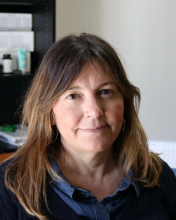
Lourdes Moreno
- Office: 2.2.A.15
- Campus: Leganés Campus
- E-mail: lmoreno@inf.uc3m.es
Short Bio
- PERFILES: Google Scholar -- Twitter -- Linkedin
- Orcid: 0000-0002-9021-2546
Full Professor in the Area of Computer Science and Artificial Intelligence at the Computer Science and Engineering Department, Universidad Carlos III de Madrid (UC3M) and researcher in Human Language and Accessibility Technologies HULAT) Group. PhD in Computer Science and Technology from UC3M and a Bachelor's in Mathematical Sciences from Universidad Complutense de Madrid.
She actively participates in national and international scientific organisations related to research and innovation. She has been the President of the Human-Computer Interaction Association (AIPO) in Spain since 2019 and as Secretary of the Board of Directors of the General Council of the Spanish Computer Sciences Society (SCIE) (2020-2024). She also served as Vice President of the Spanish chapter of ACM-SIGCHI, an international ACM special interest group in Human-Computer Interaction. Since 2022, she has been an expert for the International Federation for Information Processing (IFIP) Technical Committee on Human-Computer Interaction (IFIP TC13). In addition, she has been responsible for accessibility since 2006 and Deputy Director of the Spanish Centre for Subtitling and Audio Description (CESyA) (2024), a national reference centre on accessibility under the Ministry of Social Rights, Consumer Affairs and the 2030 Agenda.
She teaches undergraduate and postgraduate courses at the School of Engineering at UC3M, primarily in database and data architecture. Additionally, she participates in numerous initiatives in the field of Disability, Design for All, and Accessibility training at UC3M and other universities (UPM, UAM, UPC, UNED). She also participates in initiatives to promote STEM (Science, Technology, Engineering, and Mathematics) careers among girls and young women.
Her research focuses on designing, developing, and validating accessible technology for users with disabilities (sensory, physical, and cognitive) across various application domains (education, public administration, health). Her research combines the disciplines of Human-Computer Interaction (HCI), Software Engineering (SE), and Natural Language Processing (NLP) with interdisciplinary approaches. Her work follows a Human-Centred Design approach, and she has experience and knowledge of the technology used by different groups of users with disabilities and older adults.
She completed a one-year research stay (2022-2023) in the Department of Computer Science at the University of York, UK. She is the co-author of publications in high-impact journals (26) and has participated for 20 years in scientific forums with proceedings indexed in prestigious academic publishers (more than 100). She has been a guest editor for special issues in high-impact publications (4) and co-editor of the journal Interacción, a publication of the Asociación Interacción Persona-Ordenador (AIPO). She is a member of the editorial board of high-impact journals such as the Journal of Web Engineering, Universal Access in the Information Society, and Interacting with Computers. All these publications and contributions are in the field of technology accessibility.
For 20 years, she has coordinated and continuously participated in national and European research projects in the fields of technology and accessibility. She also collaborates with organisations, transferring the research developed through Article 60 contracts with companies and through patents, trademarks, and products with registered intellectual property.
She is currently Co-PI of the HumanAI project (PID2023-148577OB-C21), which addresses the challenges people with cognitive difficulties face when using generative AI. Within this framework, HCI, NLP, and AI methods are applied to support the creation of user interfaces and accessible, understandable content in Plain Language and Easy-to-Read formats, with the active involvement of people with intellectual disabilities, older adults, and other groups with cognitive accessibility needs. She is also the PI of the ZERO project (Integrated and Inclusive Mobility: Access, Payment, and Barrier-Free Transfers) (CPP2023-010411), which aims to reduce accessibility and inclusion barriers in urban and rural mobility. ZERO proposes an IoT-based ecosystem to simplify authentication and payments, combined with flexible fare applications and cryptographic technologies for data protection; the consortium includes EMT, THE BASEMENT, UPM-TRANSyT, and UPM-STRAST.
In previous projects, she served as PI of ACCESS2MEET (PID2020-116527RB-I00), focused on sensory and cognitive accessibility in videoconferencing (HCI, AI, and NLP). She was also Co-PI of Access2Citizen, linked to Royal Decree 670/2022 (BOE-A-2022-12935), with outputs such as the “Specification for integrating an accessible emergency system into the telecommunications network” (CESyA, 2023). She was the PI of the EASIER project, funded by Fundación Universia and Indra, aimed at Spanish text simplification and support for accessible user interfaces; the project is included under the Indra-Fundación Universia Accessible Technologies programme.
She belongs to various Standardisation Committees, such as the AEN 71/SC36 Committee (ICT for learning), which developed the UNE Quality Standard for Digital Educational Materials (PNE 71362: 2020), or the CTN 153 Committee (Assistive products for people with disabilities), where the UNE 153010 and UNE 153020 standards have been developed and are being updated.
Regarding management, she has been Secretary and Deputy Director of Faculty in the Department of Computer Science at UC3M (2020-2024). She is an evaluator for the State Research Agency and has managed the ICT area in the IA Call of the Division of Coordination, Evaluation, and Scientific and Technical Monitoring.
RESEARCH TOPICS: Accessibility ICT - Accessibility Engineering - Accessible user interfaces - NLP & accessibility - Education for all - Mobile Accessibility - Organisation's Accessibility Plan